.png)
Oklahoma Charities: A Registration Requirement That Is Easy to Miss

For many nonprofit organizations, staying compliant means keeping up with federal tax filings, maintaining nonprofit status with the state, and making sure corporate records are current. In Oklahoma, however, there is another requirement that can be surprisingly easy to overlook: registration to solicit charitable contributions.
The Oklahoma Attorney General’s Charity Enforcement Unit is drawing renewed attention to that requirement.
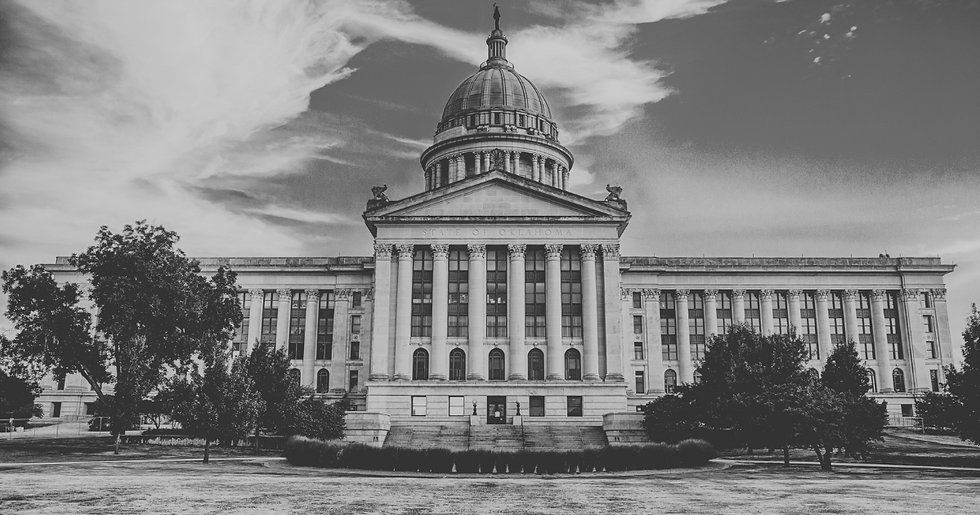
In an August 5, 2026, compliance letter to select nonprofits across Oklahoma, the Attorney General’s Office said it had become aware that numerous charitable organizations located in Oklahoma may be soliciting contributions without being properly registered with the Oklahoma Secretary of State. The letter asks recipients to review their registration requirements within 30 days, consult legal counsel when appropriate, and make sure their organizations comply with the Oklahoma Solicitation of Charitable Contributions Act.
For Oklahoma nonprofits, the important point is simple: being a nonprofit or having federal tax-exempt status does not automatically satisfy Oklahoma’s charitable solicitation requirements.
A Separate Registration Requirement
The Oklahoma Solicitation of Charitable Contributions Act is found at 18 O.S. §§ 552.1 through 552.24. Its stated purposes include promoting accountability in charitable fundraising, protecting donors, preventing fraud and providing greater transparency in charitable solicitation.
Under the Act, a charitable organization located in Oklahoma — or one soliciting contributions from people in Oklahoma — generally cannot solicit contributions until it has registered with the Oklahoma Secretary of State, unless a statutory exemption applies.
That registration is separate from the filing that creates or registers a nonprofit corporation with the Secretary of State. The Attorney General specifically notes that some organizations may effectively have two different filings with the Secretary of State: one associated with the legal entity and another permitting the organization to solicit charitable contributions.
Likewise, recognition by the IRS under Section 501(c)(3) addresses federal tax-exempt status. It does not, by itself, eliminate Oklahoma's charitable solicitation registration requirement.
Who May Be Exempt?
Not every organization that accepts donations is required to register.
Oklahoma law provides exemptions for certain religious organizations; qualifying educational institutions under specified circumstances; certain fraternal, patriotic and civic organizations soliciting only from their own membership; and certain fundraisers conducted specifically for a named individual when the statutory requirements are met.
Those exemptions have specific conditions. An organization should not assume that being a church-related group, school-affiliated organization, civic organization or small nonprofit automatically makes it exempt.
The Attorney General’s August letter also addresses this situation directly. An organization receiving the notice that determines it is exempt is asked to provide the Charity Enforcement Unit with proof of that exemption.
Registration Is an Annual Responsibility
For organizations required to register, this is not a one-time filing.
Oklahoma law generally requires annual registration by the date the organization actually files its Form 990 or by the date, including extensions, on which the Form 990 is required to be filed—whichever occurs first. The current statutory filing fee is generally $65, although qualifying organizations with contributions of $10,000 or less may be eligible for a reduced $15 fee.
The registration also requires information about the organization, its leadership, fundraising activities and finances. Organizations that solicited contributions during the previous fiscal year must report information including gross contributions and certain program, management and fundraising expenses.
That connection to the Form 990 makes charitable solicitation registration especially relevant during the annual accounting and tax-compliance process.
Why Organizations Should Pay Attention
Failure to register when registration is required is specifically identified as a violation of the Act. Oklahoma law gives the Attorney General or a district attorney authority to pursue several remedies, including injunctions, restitution, penalties and revocation of a charitable solicitation registration. A court may also impose a civil penalty of up to $10,000 per violation in qualifying enforcement actions.
That does not mean every missed or late registration will result in a $10,000 penalty. It does mean charitable solicitation registration should be treated as a real compliance responsibility rather than an administrative technicality.
The Attorney General’s current outreach is a good opportunity for Oklahoma nonprofits to check their records now rather than wait for a question from a state agency.
If your organization solicits contributions in Oklahoma, confirm whether its charitable solicitation registration is current, determine when its next registration is due and make sure the information reported to the Secretary of State agrees with the organization’s financial and tax records. If you believe an exemption applies, consider having Oklahoma legal counsel review the exemption requirements before relying on it.
Sources
Oklahoma Attorney General, Charity Enforcement Unit. Link
Oklahoma Attorney General, Charity Enforcement Unit, Charitable Solicitation Registration FAQs. Link
Oklahoma Statutes, 18 O.S. § 552.1a, Purpose of the Oklahoma Solicitation of Charitable Contributions Act. Link
Oklahoma Statutes, 18 O.S. § 552.3, Registration, fees and information required. Link
Oklahoma Statutes, 18 O.S. § 552.4, Persons and organizations exempt. Link
Oklahoma Statutes, 18 O.S. § 552.14a, Violations and enforcement of the Act.
Legal Disclaimer: This post contains general information for taxpayers and should not be relied upon as the only source of authority. Taxpayers should seek professional tax advice for more information. This information was current at time of posting; we are not responsible for updating this or any blog post/article for subsequent changes in the law or its interpretation.
Copyright © 2026. All Rights Reserved.


